Shaping Future Jobs in India | Consultation on Emerging Job Opportunities & Employability Gaps
Consultation on “Emerging Job Opportunities and Employability Gaps: Challenges and Solutions for 21st-Century Jobs” on December 16, 2025 from 11:00 a.m. to 1:00 p.m. at The National Council of YMCAs of India, Bharat Yuvak Bhavan, Jai Singh Road, New Delhi – 110 001
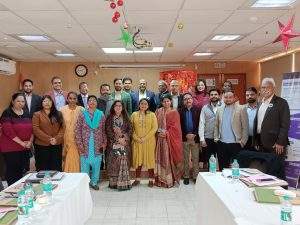
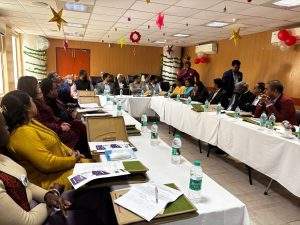
The National Council of YMCAs of India hosted a consultation on Emerging Job Opportunities and Employability Gaps to deliberate on the evolving requirements of the 21st century workforce. The consultation witnessed the participation of around 20 representatives, including members from NGOs and industry leaders, who came together to discuss emerging skill demands, workforce challenges, and inclusive solutions in the context of India’s transition into the Fourth Industrial Revolution.
The consultation was represented by senior members from YMCA and partner initiatives, including Mr. Eldo N. V., National General Secretary, National Council of YMCAs of India, Mr. Ashish Thorat, Project Country Lead, International Youth Foundation; Mr. Deepak Singh, National Project Manager and India Coordinator, International Youth Foundation; and Fr. Afilash, Consultant, National Council of YMCAs of India.
During the consultation, it was shared that YMCA New Delhi, in collaboration with World YMCA, plans to support 10,000 students annually across India through structured vocational skilling programmes. These initiatives will cater to two key age groups: a preparatory stage for youth aged 15–17 years, and an employability stage for individuals aged 18–35 years, with a focus on enhancing job readiness and workforce integration.
Adv. Dr. K. C. George, CEO, Deepalaya, addressed the audience and shared insights from an NGO perspective on emerging job opportunities and workforce preparedness. He emphasised the importance of adopting a people-centric and need-based approach to skilling initiatives, particularly when working with underserved communities.
Key points highlighted by Adv. Dr. K. C. George included:
- The need for introspection and counselling before implementing skilling programmes
- Being sensitive to the causes of underserved communities
- Providing orientation programmes for underprivileged students
- Designing need-based interventions rather than generic training models
- Building confidence and communication skills, including the ability to respond effectively
- Recognising healthcare as a promising sector, particularly:
o Elderly care
o After-care support for youth transitioning out of Institutional Care
He also suggested focused initiatives such as job fairs with special emphasis on women’s participation and inclusion. The Deepalaya team including Ms. Neha Sharma, Director – Programs; Mr. Kuriyan Behanan, Deputy Director – HR & Administration; and Ms. Shalini Rohtagi, Secretary to the CEO actively participated in the brainstorming sessions.
From the industry perspective, Ms. Swati, Joint Director at ASSOCHAM, addressed the participants and highlighted the evolving expectations of industries in the context of rapid technological change. She emphasised the growing demand for industry-aligned skills, adaptability, and continuous learning to remain relevant in the modern workplace. Ms. Swati underscored the importance of stronger collaboration between training institutions, industry bodies, and employers to bridge employability gaps and ensure smoother school-to-work and training-to-employment transitions.
Sharing the recruiter’s viewpoint, Mr. Manjit Kumar Maini, Chief Business Officer at Unison International, spoke about the practical challenges faced during recruitment processes. He highlighted that while technical competencies are important, recruiters increasingly look for work readiness, communication skills, confidence, and attitude among candidates. Mr. Maini stressed that candidates who demonstrate adaptability, problem-solving ability, and interpersonal skills are more likely to succeed in competitive job markets, particularly in emerging and service-oriented sectors.
The consultation concluded with a shared commitment among participants towards inclusive skilling, workforce readiness, and collaborative action to ensure that no youth is left behind. The session was followed by lunch and informal networking, providing participants an opportunity to exchange ideas and explore potential collaborations.